 Reviews



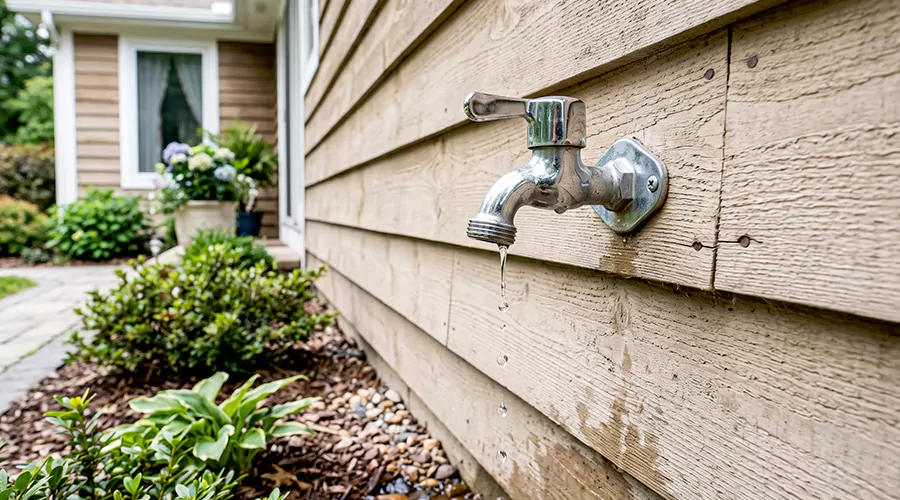
An outside water faucet commonly leaks because its internal shutoff washer has deteriorated or a connected garden hose no longer forms a watertight seal. Water escaping around the handle or from the exterior wall may have a different cause. Professional replacement typically costs 120–500 in the United States in 2026. The most useful diagnostic step is determining exactly when the faucet leaks.
A faucet that drips while closed may have an internal sealing problem. Water appearing only when a hose is connected suggests that the outlet connection or backflow-prevention device needs inspection.
Why Does an Outside Water Faucet Leak?
An outside faucet contains several components that control water movement and prevent leakage. Normal wear can gradually affect these components. Seasonal temperature changes can also damage exposed or incorrectly drained plumbing.
Common causes include:
- Worn valve washer: Water continues passing through the faucet when it is closed.
- Damaged packing: Water escapes around the handle.
- Worn hose gasket: A connected garden hose leaks at its threaded fitting.
- Vacuum breaker failure: Water escapes from the backflow-prevention assembly.
- Loose connection: Moisture develops where the faucet connects to the supply pipe.
- Corroded components: Deteriorated metal affects the faucet's sealing surfaces.
- Freeze damage: Trapped water expands and damages the faucet or connected piping.
The actual cause depends on where water first becomes visible. A worn hose gasket is a different problem from a faucet that drips continuously without a hose attached.
How Can You Identify the Source of the Leak?
Begin by observing the faucet without a connected hose. This removes one possible source of leakage and makes the main valve easier to evaluate.
| Leak Pattern | Possible Cause | First Action |
|---|---|---|
| Drips while closed | Worn internal washer | Inspect the valve |
| Leaks behind handle | Damaged packing | Inspect the stem area |
| Leaks with hose attached | Hose gasket or connection | Remove and inspect hose |
| Sprays from upper assembly | Vacuum breaker | Inspect backflow device |
| Leaks at wall connection | Supply fitting or pipe damage | Trace moisture |
| Leaks after winter | Freeze damage | Check exposed and concealed piping |
Water may travel along the faucet before dripping. Always dry the fixture before performing a controlled test.
Why Does My Outside Faucet Leak When a Hose Is Connected?
A leak that appears only with a connected garden hose often originates from the hose fitting or its sealing washer. The washer sits inside the hose's threaded connector. It compresses against the faucet outlet when the hose is attached. Over time, the washer can become flattened or cracked. It may also fall out when the hose is disconnected.
A damaged sealing washer allows water to escape when the connection is pressurized.
To inspect the connection:
- Turn off the faucet.
- Disconnect the hose.
- Check the washer inside the hose connector.
- Inspect the faucet threads for visible damage.
- Replace a cracked or missing washer.
- Reconnect the hose carefully.
- Turn on the water and observe the connection.
If leakage continues, inspect the hose connector itself for damage. Avoid repeatedly tightening a damaged fitting.
Can a Hose Nozzle Affect the Leak?
A garden hose fitted with a closed spray nozzle can remain pressurized while the faucet is open. This pressure may expose a weak hose gasket or a problem with the faucet's vacuum breaker. For example, a connection may appear dry when water flows freely through an open hose but leak when the nozzle is closed. A controlled test can help identify this pattern.
However, do not leave an unattended hose pressurized during troubleshooting. A damaged hose or connector can fail unexpectedly. The safest approach is to isolate the faucet and inspect the sealing components before repeating the test.
Why Does Water Leak Around the Outside Faucet Handle?
Water escaping around the handle usually indicates a problem with the valve-stem packing. The packing creates a seal around the moving stem. When the material deteriorates, water can escape while the faucet operates. A loose packing nut may produce a similar symptom.
For suitable conventional designs, a careful adjustment can sometimes correct the problem. However, excessive tightening can damage the packing assembly. If the leak remains after an appropriate adjustment, replacement packing may be necessary. Always isolate the water supply before disassembling the valve.
Can an Outside Faucet Leak Inside the Wall?
Yes. An outside faucet connects to plumbing that passes through or runs along the building. A damaged supply connection or frost-free faucet tube can release water inside the wall.
This problem deserves particular attention because the visible exterior faucet may appear normal. Woodford explains that a frost-proof faucet can develop a split internal tube when water remains trapped during freezing weather. The resulting leak may become noticeable only when the faucet is operated.
Warning signs include:
- Dampness on the interior wall.
- Water appearing below the faucet.
- Moisture near the exterior wall connection.
- A leak that occurs only while the faucet is running.
- New water damage following winter.
Stop using the fixture when these symptoms suggest a hidden leak.
What Are the Warning Signs of a Developing Outside Faucet Leak?
Regular inspection can identify problems before they become more serious.
Watch for these warning signs:
- Water continues dripping after shutoff.
- The hose connection leaks during use.
- The handle becomes difficult to operate.
- Moisture appears behind the packing nut.
- The vacuum breaker releases unusual amounts of water.
- Corrosion develops around the faucet body.
- Water collects near the exterior wall.
- The faucet begins leaking after freezing weather.
- An interior wall develops unexplained dampness.
- A previous repair fails to stop the leak.
The location and timing of these symptoms can help identify which component requires attention.
How Can You Test an Outside Water Faucet?
A staged test can separate a faucet leak from a hose-connection problem.
Follow these steps:
- Disconnect the garden hose.
- Dry the faucet completely.
- Observe the outlet while the handle is closed.
- Open the faucet briefly.
- Inspect the handle and packing nut.
- Observe the vacuum breaker.
- Turn the faucet off.
- Reconnect the hose.
- Check for leakage at the connection.
- Inspect the surrounding wall.
Stop if moisture appears to be entering the building. A concealed supply leak should not be approached as a simple washer replacement.
How Much Does Outside Faucet Repair Cost?
Repair costs depend on the failed component and whether the connected plumbing is accessible.
| Repair | 2026 U.S. Cost Reference |
|---|---|
| Replacement hose washer | Low-cost DIY part |
| Minor accessible faucet repair | Depends on parts and labor |
| Standard spigot replacement | 120–250 |
| Frost-free spigot replacement | 180–350 |
| General outdoor spigot replacement | 120–500 |
| Average replacement cost | Approximately $250 |
These figures reflect national replacement costs published in April 2026. Hidden pipe repairs can increase the total.
When Should You Call a Professional?
Professional assistance becomes appropriate when the leak involves damaged piping or the faucet cannot be repaired through accessible component replacement.
Seek assistance when:
- Water appears inside the wall.
- Freeze damage is suspected.
- The faucet body is cracked.
- The supply connection is inaccessible.
- A shutoff valve is damaged.
- Leakage continues after the correct seal has been replaced.
- Water damage is spreading.
A concealed leak deserves prompt attention because surrounding materials may remain wet even after exterior dripping stops.
How Can You Prevent Future Outside Faucet Leaks?
Preventive maintenance should focus on sealing components and seasonal protection.
Useful habits include:
- Inspect hose washers periodically.
- Disconnect hoses after use when appropriate.
- Avoid leaving a hose pressurized unnecessarily.
- Remove hoses before freezing weather.
- Check accessible fittings for moisture.
- Avoid overtightening faucet handles.
- Investigate unusual dripping promptly.
Correctly installed frost-free faucets require an unobstructed drainage path to provide their intended protection.
Conclusion
If your outside water faucet is leaking, check the connection before assuming the faucet itself has failed. A damaged hose washer may explain a leak that occurs only when a garden hose is attached. Continuous dripping often points toward an internal valve problem.
Inspect handle packing and the vacuum breaker separately. Water entering the wall or recurring leaks after freezing weather may require professional diagnosis.
Frequently Asked Questions
Why does my outside faucet leak when the hose is attached?
The hose washer or connector may be damaged. Inspect the connection before replacing the faucet.
Why does my outside faucet drip while closed?
A worn internal washer or damaged valve seat may be preventing complete shutoff.
Can a hose nozzle cause an outdoor faucet to leak?
A closed nozzle creates backpressure that can expose weak hose connections or vacuum breaker problems.
Why does my faucet leak after winter?
Trapped water may have frozen and damaged the faucet or connected piping.
Can a leaking outside faucet damage my house?
Yes. A leak near or inside the exterior wall can damage surrounding building materials.